Pharmaceutical Machinery Exporter from India to New Zealand

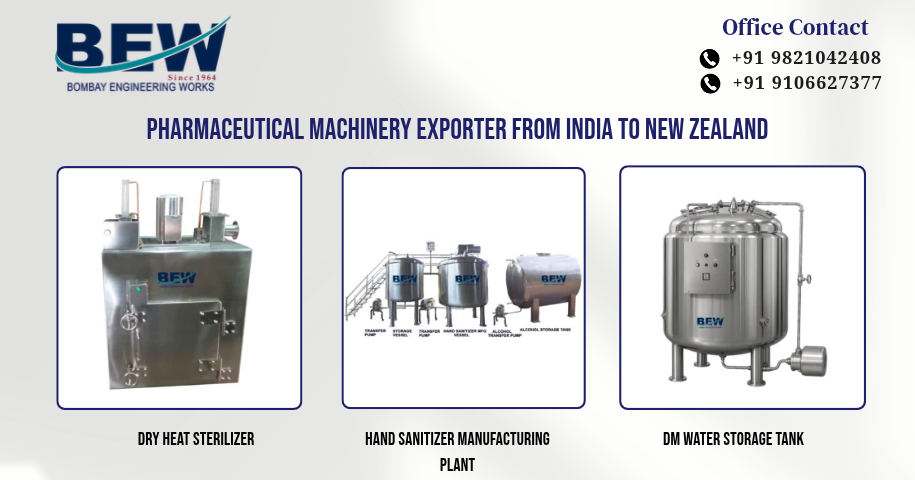




Pharmaceutical Machinery Exporter from India to New Zealand
The pharmaceutical industry requires reliable, efficient, and precisely engineered machinery to maintain product quality, improve manufacturing productivity, and support consistent production processes. As pharmaceutical manufacturing continues to evolve, businesses in New Zealand are looking for dependable international suppliers that can provide suitable equipment, technical information, and long-term support. Choosing the right Pharmaceutical Machinery Exporter from India to New Zealand can help pharmaceutical manufacturers, contract manufacturers, and processing facilities source equipment that meets their operational requirements.
Bombay Engineering Works, established in 1964, is an experienced Indian manufacturer and supplier of pharmaceutical, chemical, food processing, cosmetic, Ayurvedic, and herbal machinery. With decades of industrial experience, the company serves businesses seeking practical machinery solutions for different processing applications.
Call us today: 9821042408 Website: www.bombayengg.com
About Bombay Engineering Works
Bombay Engineering Works has been serving industrial customers since 1964, developing expertise across several machinery and processing sectors. The company manufactures and supplies equipment for pharmaceutical production, chemical processing, food manufacturing, cosmetics, and Ayurvedic and herbal product preparation.
Its multidisciplinary industry experience helps businesses explore machinery options based on their production processes, material characteristics, capacity requirements, and operational objectives.
As an Indian pharmaceutical machinery manufacturer and supplier, Bombay Engineering Works aims to help customers identify appropriate equipment for their manufacturing needs. For international buyers in New Zealand, discussing project specifications, machinery configuration, installation requirements, and export documentation before ordering is an important step towards a successful procurement process.
Why Choose a Pharmaceutical Machinery Exporter from India to New Zealand?
India has an established industrial manufacturing sector serving pharmaceutical and processing businesses in domestic and international markets. For New Zealand companies, sourcing equipment from an Indian supplier can provide an additional option when comparing machinery specifications, manufacturing capabilities, and overall project costs.
Here are several reasons to consider an experienced Indian machinery supplier:
1. Diverse machinery options: Buyers can explore equipment for different pharmaceutical and processing applications through suppliers with experience across multiple industrial sectors.
2. Manufacturing expertise: Established manufacturers can help customers understand equipment configurations, operating requirements, and production-related considerations.
3. Procurement flexibility: Depending on the supplier’s capabilities, buyers may be able to discuss suitable machinery specifications and configurations for their production facilities.
4. Cost considerations: Comparing quotations from international suppliers may help businesses evaluate equipment costs, shipping, insurance, installation, spare parts, and ongoing maintenance.
5. Cross-industry knowledge: Manufacturers serving pharmaceutical, chemical, cosmetic, food, and herbal processing industries may offer useful experience with different material-handling and processing requirements.
Nevertheless, the lowest initial quotation should not be the only deciding factor. Equipment suitability, safety, documentation, compliance, lifecycle costs, and service arrangements are equally important.
Pharmaceutical Machinery Available for New Zealand Industries
The machinery required by a pharmaceutical manufacturer depends on its products, formulation methods, batch sizes, production capacity, and packaging processes. Bombay Engineering Works offers machinery across several industrial categories. Buyers should confirm the availability and configuration of specific pharmaceutical equipment directly with the company.
Common equipment categories that pharmaceutical manufacturers may evaluate include:
1. Mixing and Blending Equipment
Mixing and blending machinery helps combine powders, granules, liquids, and other ingredients according to defined processing requirements. Equipment selection depends on material properties, batch volume, mixing uniformity, cleaning procedures, and the characteristics of the final formulation.
2. Powder Processing Machinery
Powder processing equipment supports operations such as material preparation, blending, and handling. Pharmaceutical applications may require careful control of particle characteristics, dust containment, material transfer, and cross-contamination risks.
3. Granulation and Material Preparation Equipment
Granulation processes can help convert powders into granules with properties suitable for subsequent manufacturing operations. The appropriate machinery depends on the formulation, process design, moisture sensitivity, and required granule characteristics.
4. Liquid Processing Equipment
Liquid pharmaceutical manufacturing may involve mixing, preparation, and controlled handling of liquid formulations. Buyers should assess material compatibility, cleaning requirements, temperature control, and any specific hygiene or containment requirements associated with their products.
5. Supporting Processing Equipment
Depending on the manufacturing facility, supporting machinery may be required for material transfer, process integration, cleaning, and other production activities. A complete equipment assessment should consider how individual machines work together within the overall production line.
How to Select the Right Pharmaceutical Machinery for Export to New Zealand
Selecting suitable machinery requires a structured evaluation of production needs and destination-country requirements. Before placing an international order, consider the following factors.
Define production requirements: Identify the product type, formulation, batch size, production capacity, and expected operating schedule. These details help establish the basic equipment specifications.
Evaluate material compatibility: Confirm that the machine’s product-contact materials, seals, finishes, and other components are suitable for the ingredients and processing conditions involved.
Review cleaning and contamination control: Pharmaceutical equipment may require documented cleaning procedures, appropriate surface finishes, and design features that help prevent cross-contamination.
Check automation and controls: Assess whether manual, semi-automatic, or automated operation is appropriate for the production process. Review available control systems, monitoring functions, and operator requirements.
Confirm documentation: Request applicable technical drawings, operating manuals, maintenance instructions, material specifications, and relevant quality documentation. Qualification and validation documents should be discussed where required for the intended application.
Assess installation and maintenance: Consider installation support, operator training, spare parts, preventive maintenance, and access to technical assistance after delivery.
Calculate total landed cost: Include equipment pricing, export packaging, international freight, insurance, customs-related charges, taxes, installation, and any required modifications.
A thorough evaluation helps New Zealand buyers make informed procurement decisions and reduces the likelihood of unexpected costs or operational difficulties.
Pharmaceutical Machinery Export Requirements for New Zealand
Exporting pharmaceutical machinery involves more than manufacturing and shipping the equipment. Importers should assess applicable New Zealand import requirements and the regulations relevant to their intended use.
Before confirming an order, buyers and suppliers should discuss the following areas:
- Export documentation: Confirm the commercial invoice, packing list, transport documents, and any other documentation required for the shipment.
- Customs classification: Establish the appropriate tariff classification and determine whether duties, taxes, permits, or other import requirements apply.
- Biosecurity considerations: Check whether wooden packaging or other shipment materials are subject to New Zealand biosecurity requirements.
- Electrical compatibility: Verify voltage, frequency, electrical connections, control systems, and applicable electrical safety requirements.
- Machinery safety: Review relevant machinery safety obligations, risk assessments, guarding, emergency stops, and operating instructions.
- Pharmaceutical quality requirements: Determine whether the equipment must satisfy specific requirements arising from the manufacturing process, applicable Good Manufacturing Practice (GMP) expectations, or the buyer’s quality system.
The New Zealand importer should confirm current requirements with the appropriate authorities and qualified regulatory advisers. Pharmaceutical machinery does not automatically require the same approvals as a finished medicinal product; obligations depend on the equipment, intended application, and relevant legal framework.
Similarly, claims of GMP compliance, validation readiness, or regulatory approval should only be made when supported by appropriate evidence.
Applications Across Pharmaceutical and Related Industries
Pharmaceutical machinery supports multiple production activities, depending on the equipment design and manufacturing process. Potential applications include:
- Pharmaceutical formulation and preparation.
- Powder and granule processing.
- Mixing and blending operations.
- Liquid preparation and processing.
- Research, development, and pilot-scale production, where suitable equipment is available.
- Supporting processes within established manufacturing facilities.
Related industries may also require specialised machinery. Cosmetic manufacturers produce creams, lotions, gels, and other personal care products, while Ayurvedic and herbal manufacturers process plant-based ingredients and formulations. Chemical and food processing facilities have their own equipment requirements and operating conditions.
Although these industries can share certain processing principles, equipment must be selected for its intended use. Machinery designed for one application should not be assumed suitable for pharmaceutical production without an appropriate technical assessment.
Benefits of Working with an Established Indian Machinery Supplier
When purchasing equipment internationally, supplier experience and communication can significantly influence the procurement process. Bombay Engineering Works has operated since 1964 and serves several machinery categories, giving buyers an opportunity to discuss their requirements with a company experienced in industrial equipment manufacturing and supply.
Potential benefits of working with an established supplier include:
Clearer technical discussions: Sharing process details early helps both parties evaluate machinery suitability and identify specification gaps.
Coordinated procurement: Confirming equipment scope, delivery expectations, documentation, and packaging requirements before dispatch helps establish a clearer purchasing process.
Application-focused selection: Discussing production goals and operating conditions can help buyers shortlist appropriate equipment.
Long-term planning: Maintenance requirements, replacement parts, operating instructions, and technical support arrangements should be considered before placing the order.
For New Zealand customers, clear communication is particularly important because international shipments can involve longer lead times, freight coordination, and additional logistical considerations.
E-E-A-T (Experience, Expertise, Authoritativeness & Trustworthiness)
Experience
Established in 1964, Bombay Engineering Works brings decades of industrial machinery manufacturing and supply experience across pharmaceutical and related processing industries.
Expertise
The company specialises in pharmaceutical, chemical, food processing, cosmetic, Ayurvedic, and herbal machinery for diverse industrial applications.
Authoritativeness
Bombay Engineering Works has a long-standing presence in the machinery sector, serving businesses seeking equipment for their processing and manufacturing requirements.
Trustworthiness
The company encourages customers to verify technical specifications, equipment suitability, documentation, and export requirements before purchasing machinery for New Zealand.
Frequently Asked Questions (FAQs)
Q1. Who is a pharmaceutical machinery exporter from India to New Zealand?
Ans: Bombay Engineering Works, established in 1964, manufactures and supplies pharmaceutical and other industrial machinery. New Zealand buyers can contact the company to enquire about equipment availability and export requirements.
Q2. What types of pharmaceutical machinery can be exported to New Zealand?
Ans: Depending on availability, pharmaceutical machinery may include mixing and blending equipment, powder processing machinery, granulation equipment, and liquid processing systems.
Q3. Why choose an Indian pharmaceutical machinery supplier?
Ans: Indian machinery suppliers offer options for comparing equipment specifications, manufacturing capabilities, and procurement costs to identify machinery suited to specific production requirements.
Q4. What should I check before importing pharmaceutical machinery into New Zealand?
Ans: Check technical specifications, material compatibility, operating requirements, export documentation, shipping costs, electrical safety, and applicable New Zealand import and regulatory requirements.
Q5. How can I contact Bombay Engineering Works for pharmaceutical machinery exports?
Ans: Contact Bombay Engineering Works at 9821042408 or visit https://www.bombayengg.com/ to enquire about available pharmaceutical machinery, technical specifications, and export quotations.
Contact Us
Address: Unit No. 9, Unity Industrial Estate, Naikpada, Valiv Village, Near Ganesh Mandir, Vasai East, Dist: Palghar-401208.
Phone: +91 9821042408 / +91 9106627377
Email: info@bombayengg.com / admin@bombayengg.com / support@bombayengg.com
Website: www.bombayengg.com
Conclusion
A reliable Pharmaceutical Machinery Exporter from India to New Zealand can help businesses source suitable equipment for their pharmaceutical manufacturing and processing requirements. Established in 1964, Bombay Engineering Works manufactures and supplies pharmaceutical, chemical, food processing, cosmetic, Ayurvedic, and herbal machinery. With decades of industry experience, the company helps customers explore machinery options based on their specific production needs and technical requirements.
If you are looking for pharmaceutical machinery for your business in New Zealand, connect with Bombay Engineering Works to discuss equipment specifications, availability, and export arrangements. Visit www.bombayengg.com or call 9821042408 to enquire about suitable machinery solutions for your manufacturing operations.
Call Bombay Engg today: 9821042408
Visit: www.bombayengg.com
“Don’t forget to share this post!”