Liquid Manufacturing Plant price in India

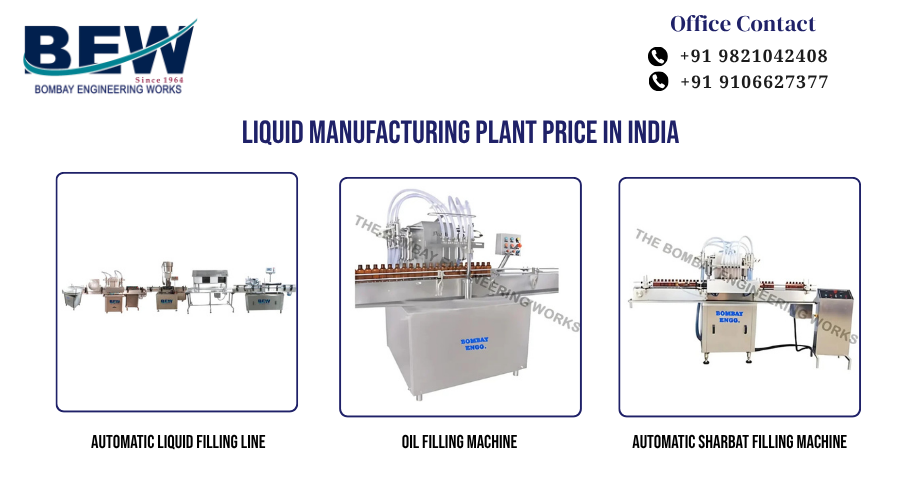




Liquid Manufacturing Plant price in India
The Liquid Manufacturing Plant price in India depends on factors such as production capacity, vessel size, material of construction, automation, mixing technology, and required utilities. Bombay Engineering Works, established in 1964, manufactures and supplies reliable liquid manufacturing machinery for pharmaceutical, cosmetic, food, chemical, Ayurvedic, and herbal industries.
With extensive engineering experience, Bombay Engineering Works offers application-specific equipment and integrated manufacturing solutions designed to meet diverse production requirements. Businesses can consult the company to select suitable machinery and understand the investment required for their specific liquid manufacturing plant.
Call us today: 9821042408
Website: www.bombayengg.com
About Bombay Engineering Works
Decades of Engineering Experience You Can Trust
Established in 1964, Bombay Engineering Works is an experienced manufacturer and supplier of industrial machinery for pharmaceutical, chemical, food processing, cosmetic, Ayurvedic, and herbal industries. With decades of engineering experience, the company focuses on developing reliable, efficient, and application-specific machinery for diverse manufacturing requirements.
Our Commitment to Quality & Engineering Excellence:
- 60+ years of engineering experience
- Multi-industry machinery solutions
- Customized process-based machinery
- Multiple capacities and batch sizes
- Precision, hygiene & durability
- Modern manufacturing solutions
- Expert machinery selection support
- Reliable long-term performance
Whether you are planning a new liquid manufacturing plant, expanding production capacity, or upgrading existing machinery, Bombay Engineering Works can help you identify an equipment configuration suited to your product, batch size, process, and production goals.
What Is the Liquid Manufacturing Plant Price in India?
The liquid manufacturing plant price in India varies according to production capacity, batch size, vessel configuration, material of construction, automation, mixing requirements, and supporting utilities. A compact semi-automatic setup will have a different investment level from a fully integrated plant with manufacturing vessels, storage, filtration, transfer, filling, and automated controls.
The overall cost is also influenced by the type of product and its manufacturing process. Key factors include:
- Production capacity and batch size – Larger capacities generally require larger vessels and supporting equipment.
- Equipment configuration – Manufacturing vessels, agitators, homogenizers, storage tanks, pumps, filtration, and filling systems can affect the investment.
- Material and automation – Stainless steel grade, surface finish, PLC controls, and the level of automation influence the final cost.
- Utilities and customization – Heating, cooling, vacuum, CIP, installation, commissioning, and application-specific engineering can add to the overall project cost.
Therefore, buyers should share their batch size, production capacity, product application, and automation requirements when requesting a quotation rather than relying on a standard per-litre price.
Bombay Engineering Works, established in 1964, manufactures liquid manufacturing machinery for pharmaceutical, cosmetic, food, chemical, Ayurvedic, and herbal industries. The company provides application-specific equipment and integrated solutions designed around different production requirements, helping businesses select suitable machinery and estimate the investment for their plant.
What Is a Liquid Manufacturing Plant?
A liquid manufacturing plant is a collection of process equipment designed to manufacture liquid products through controlled operations such as charging, mixing, heating, cooling, homogenization, filtration, storage, transfer, and filling.
Depending on the industry, the finished product could be:
- Pharmaceutical syrups
- Oral liquids
- Suspensions
- Solutions
- Antiseptic liquids
- Cosmetic lotions
- Shampoos
- Liquid creams
- Herbal liquids
- Ayurvedic formulations
- Food sauces
- Flavouring liquids
- Chemical formulations
- Cleaning liquids
- Industrial liquid products
The equipment configuration changes according to the physical and chemical characteristics of the product. For example, a low-viscosity liquid may require a relatively straightforward mixing and transfer arrangement. A high-viscosity cosmetic formulation may require stronger agitation, homogenization, heating, scraping, or vacuum processing.
Similarly, pharmaceutical liquid manufacturing can require greater attention to hygienic design, material selection, surface finish, process control, filtration, cleaning, and documentation. Bombay Engineering Works lists a dedicated Liquid Section within its pharmaceutical machinery portfolio, alongside ointment, injectable, dry syrup, tablet, capsule, coating, and utility sections.
Why Liquid Manufacturing Plant Price Varies So Much?
The liquid manufacturing plant price in India varies because every plant is designed around its product, batch size, capacity, and process requirements. A compact cosmetic setup may need basic equipment, while a pharmaceutical facility can require multiple vessels, advanced mixing, filtration, automation, and controlled utilities.
1. Production Capacity & Batch Size
Capacity and batch size determine the size and number of manufacturing vessels, storage tanks, pumps, filtration systems, and filling equipment. Higher production requirements generally require a more extensive process system.
2. Material & Mixing Requirements
Material of construction, stainless steel grade, surface finish, agitator type, and homogenization requirements can significantly affect cost. The correct configuration depends on product viscosity, density, solids content, and required mixing performance.
3. Heating, Cooling & Automation
Some formulations require heating, cooling, temperature control, vacuum, CIP, or automated PLC systems. These additional process and control requirements can increase the overall plant investment.
4. Product & Customization Requirements
Pharmaceutical, cosmetic, food, chemical, Ayurvedic, and herbal products can have different manufacturing requirements. Bombay Engineering Works, established in 1964, provides application-specific liquid manufacturing machinery designed according to different production and process needs.
Major Equipment Used in a Liquid Manufacturing Plant
A complete liquid manufacturing setup can include several types of process and packaging equipment. The exact configuration depends on the product, batch size, production capacity, and manufacturing process.
Manufacturing & Storage Equipment
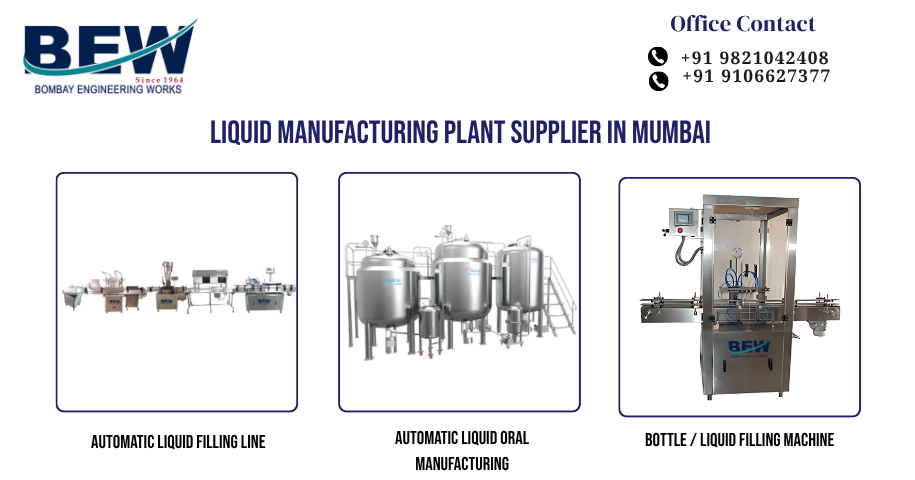
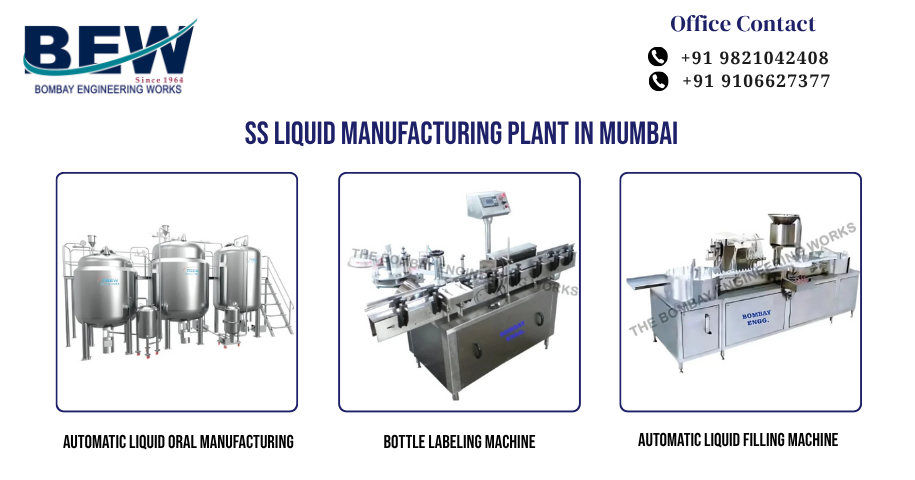
The manufacturing vessel is the central process equipment where ingredients are charged, mixed, and processed. It may include an agitator, jacket, temperature sensor, sight glass, spray ball, sampling arrangement, and control panel. Storage or holding tanks are then used to manage batch holding, production flow, and transfer before filling.
Key considerations include:
- Vessel capacity and material of construction
- Agitator and heating/cooling requirements
- Storage capacity and plant layout
Transfer & Filtration Equipment
Transfer pumps move liquids between manufacturing vessels, filters, storage tanks, and filling machines. Pump selection depends on flow rate, viscosity, pressure, temperature, and product characteristics. Filtration systems may also be required to remove unwanted particles or achieve the desired product clarity.
Important selection factors include:
- Product viscosity and flow rate
- Required filtration level and filter media
- Hygienic and process requirements
Liquid Filling & Packaging Equipment
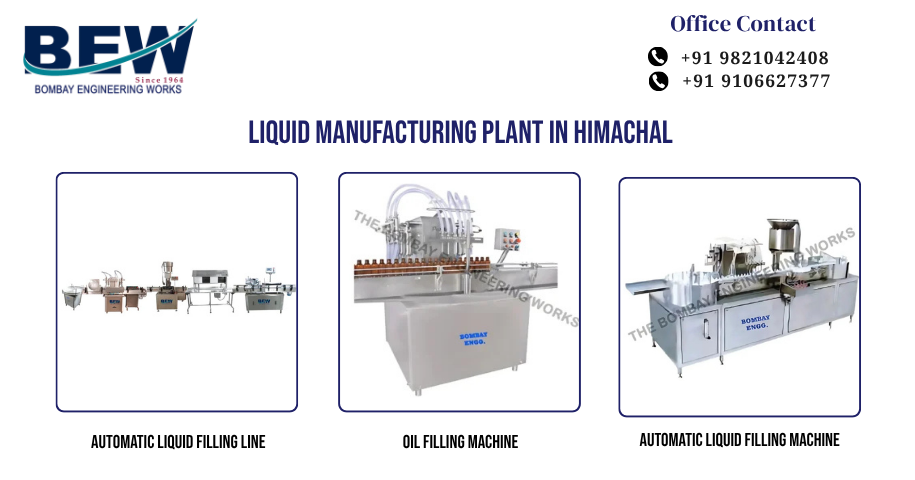
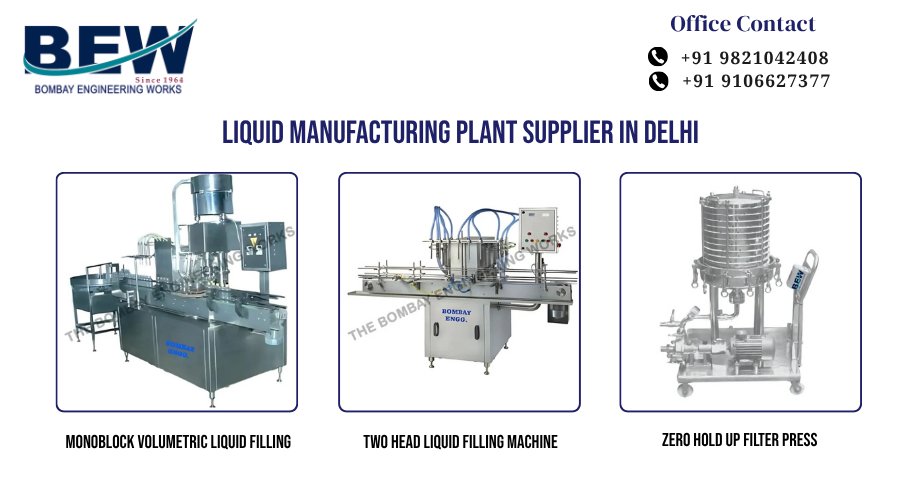
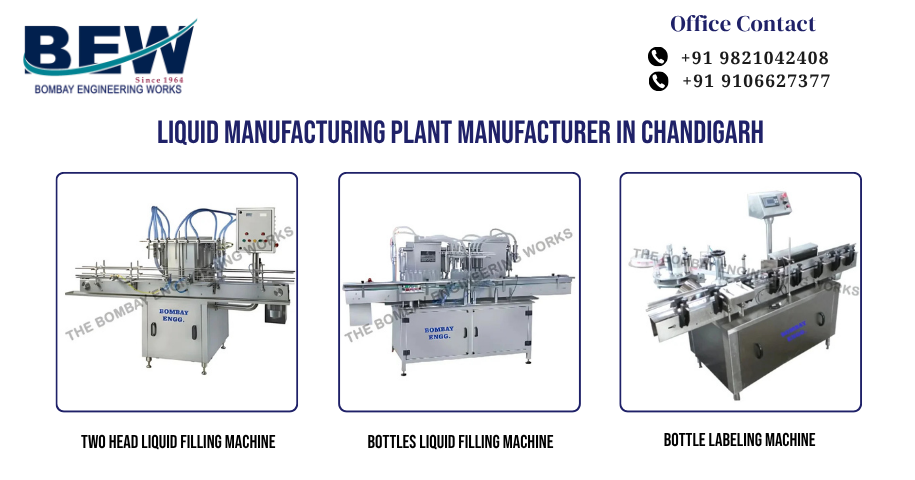
The finished liquid is commonly transferred to a filling system for packaging. Depending on the application, the line may include bottle feeding, liquid filling, capping, sealing, labelling, batch coding, and inspection. The filling machine should match the container type, filling volume, product viscosity, production speed, and required accuracy.
Plant Integration & Controls
Modern liquid manufacturing plants may integrate vessels, pumps, filtration, storage, filling equipment, and automated controls into a coordinated production system. The level of automation and integration can affect both plant performance and the overall liquid manufacturing plant price in India.
Pharmaceutical Liquid Manufacturing Plant
Pharmaceutical liquids require careful process design because product quality, consistency, hygiene, and controlled manufacturing conditions are critical.
Typical pharmaceutical liquid products include:
- Syrups
- Oral solutions
- Suspensions
- Drops
- Pharmaceutical liquids
- Certain disinfectant or antiseptic formulations
The exact configuration should be determined from the product formulation and applicable regulatory requirements. Bombay Engineering Works specifically identifies pharmaceutical liquid machinery as part of its broader pharmaceutical machinery range.
Liquid Manufacturing Plants for Different Industries
Cosmetic Liquid Manufacturing Plant
Used for shampoo, conditioner, hair serum, body wash, liquid cleansers, lotions, and personal-care formulations. Equipment can be customized based on viscosity, batch size, heating, cooling, homogenization, vacuum processing, and filling requirements.
Key Considerations:
- Product viscosity
- Batch capacity
- Heating and cooling requirements
- Homogenization
- Vacuum processing
- Filling and packaging requirements
Ayurvedic & Herbal Liquid Manufacturing Plant
Designed for herbal liquids, extracts, syrups, oils, and other formulations. Depending on the product, the process may include extraction, heating, mixing, filtration, holding, storage, and filling.
Key Processes:
- Ingredient charging
- Extraction and heating
- Mixing and blending
- Filtration
- Holding and storage
- Filling
Chemical Liquid Manufacturing Plant
Chemical applications require careful selection of equipment based on corrosion resistance, chemical compatibility, temperature, pressure, agitation, sealing, and safety.
Key Equipment Considerations:
- Corrosion-resistant construction
- Chemical compatibility
- Temperature and pressure control
- Agitation and mixing
- Proper sealing systems
- Safety and ventilation
Food Liquid Manufacturing Plant
Suitable for sauces, syrups, flavouring liquids, beverages, concentrates, and liquid ingredients. Equipment is selected according to viscosity, solids content, temperature, batch size, hygiene requirements, and packaging needs.
Key Requirements:
- Hygienic construction
- Easy cleaning
- Viscosity control
- Solids handling
- Temperature control
- Batch and packaging capacity
How to Reduce Liquid Manufacturing Plant Cost Without Compromising Quality
If your budget is limited, the plant can be planned strategically to reduce unnecessary investment while maintaining quality and performance.
Optimize Capacity & Automation
- Choose equipment according to actual production requirements.
- Avoid oversized machinery unless future demand justifies it.
- Automate critical processes first.
- Plan automation upgrades as production increases.
Standardize Equipment & Plan Expansion
- Use standardized equipment where practical.
- Simplify spare-parts and maintenance requirements.
- Keep space and utilities ready for future expansion.
- Design the plant for easy equipment upgrades.
Avoid Under-Specification
- Select suitable materials and equipment specifications.
- Consider durability, safety, and process requirements.
- Avoid reducing quality just to lower the initial cost.
- Focus on optimized capital expenditure rather than the lowest purchase price.
Why Bombay Engineering Works for Liquid Manufacturing Machinery?
For companies searching for a liquid manufacturing plant manufacturer in India, experience matters. Bombay Engineering Works has been involved in machinery manufacturing since 1964 and has developed equipment serving several industries.
Its portfolio includes pharmaceutical machinery with dedicated liquid-processing equipment, as well as machinery for chemical, food, cosmetic, Ayurvedic, and herbal applications.
Key strengths include:
- Established in 1964
- Pharmaceutical machinery expertise
- Chemical machinery
- Food processing machinery
- Cosmetic machinery
- Ayurvedic machinery
- Herbal machinery
- More than 80 equipment types
- 1,500+ stated global installations
- Manufacturing and export experience
- Customized machinery solutions
- Technical support
E-E-A-T (Experience Expertise Authoritativeness Trustworthiness)
Experience
Bombay Engineering Works states that it was established in 1964 and has been involved in machinery manufacturing for decades.
Expertise
Its portfolio covers pharmaceutical, chemical, food processing, cosmetic, Ayurvedic, and herbal machinery, including dedicated pharmaceutical liquid-processing equipment.
Authoritativeness
The company states that it has developed more than 80 types of equipment and installed more than 1,500 machines globally.
Trustworthiness
Machinery purchasing should be based on transparent specifications, appropriate engineering, realistic performance expectations, technical documentation, service support, and a clear commercial quotation—not simply an attractive headline price.
Frequently Asked Questions (FAQs)
Q1. Which industries use liquid manufacturing plants?
Ans: Pharmaceutical, cosmetic, chemical, food processing, Ayurvedic, herbal, and several other industries use liquid processing equipment.
Q2. What equipment is required for a liquid manufacturing plant?
Ans: A typical setup can include manufacturing vessels, agitators, storage tanks, transfer pumps, filtration systems, holding vessels, filling machines, and supporting utilities. The actual equipment list depends on the product and process.
Q3. Does batch size affect liquid manufacturing plant price?
Ans: Yes. Larger batch sizes generally require larger vessels and supporting equipment, which can increase the overall investment.
Q4. Can a liquid manufacturing plant be customized?
Ans: Yes. Liquid plants can be engineered around product characteristics, production capacity, mixing requirements, heating/cooling needs, automation, filtration, and packaging requirements.
Q5. Is stainless steel suitable for liquid manufacturing equipment?
Ans: Stainless steel is widely used for many hygienic processing applications, but the appropriate material grade and finish should be selected according to the product, process, and applicable requirements.
Contact Bombay Engineering Works Today
Address: Unit No. 9, Unity Industrial Estate, Naikpada, Valiv Village, Near Ganesh Mandir, Vasai East, Dist: Palghar-401208.
Phone: +91 9821042408 / +91 9106627377
Email: info@bombayengg.com / admin@bombayengg.com / support@bombayengg.com
Website: www.bombayengg.com
Conclusion
The Liquid Manufacturing Plant price in India depends on far more than the size of the manufacturing vessel. Batch capacity, product characteristics, material of construction, mixing technology, heating and cooling, homogenization, filtration, storage, filling, automation, utilities, installation, and documentation can all influence the final project investment. Therefore, a customized technical quotation is the best way to determine the actual cost of a liquid manufacturing setup.
With its stated history dating back to 1964, broad machinery portfolio, and experience across pharmaceutical, chemical, food, cosmetic, Ayurvedic, and herbal industries, Bombay Engineering Works can be considered when evaluating machinery requirements for liquid processing applications. For your specific requirement, call 9821042408 and discuss your product, batch size, production capacity, and desired plant configuration.
Call Bombay Engineering Works today: 9821042408
Visit: www.bombayengg.com
“Don’t forget to share this post!”