Blog
Ointment Plant for Pharmaceutical Industry





Ointment Plant for Pharmaceutical Industry – Complete Guide by Bombay Engineering Works
The pharmaceutical industry is one of the most critical sectors in modern healthcare systems, and the demand for high-quality topical products such as medicated ointments, skin creams, pharmaceutical gels, and therapeutic lotions is continuously increasing. To meet this growing demand, manufacturers rely on advanced engineering expertise and modern industrial solutions like the Ointment Plant for Pharmaceutical Industry, ensuring efficient production support and reliable manufacturing systems.
At Bombay Engineering Works we specialize in designing and manufacturing solutions for high-performance pharmaceutical machinery that ensures precision engineering, industrial hygiene standards, and consistent production processes. Established in 1964, we are one of India’s most trusted manufacturers and suppliers of Pharmaceutical Machinery, Chemical processing equipment, Food Processing Machinery, Cosmetic Machinery solutions, and Ayurvedic & Herbal Machinery.
Call us today: 9821042408
Website: www.bombayengg.com
Why Choose Bombay Engineering Works?
When it comes to pharmaceutical machinery, Bombay Engineering Works stands as a trusted name in the industry since 1964.
Our Strengths:
We are committed to delivering reliable, durable, and efficient machinery solutions that help pharmaceutical companies grow and succeed.
What is an Ointment Plant for Pharmaceutical Industry?
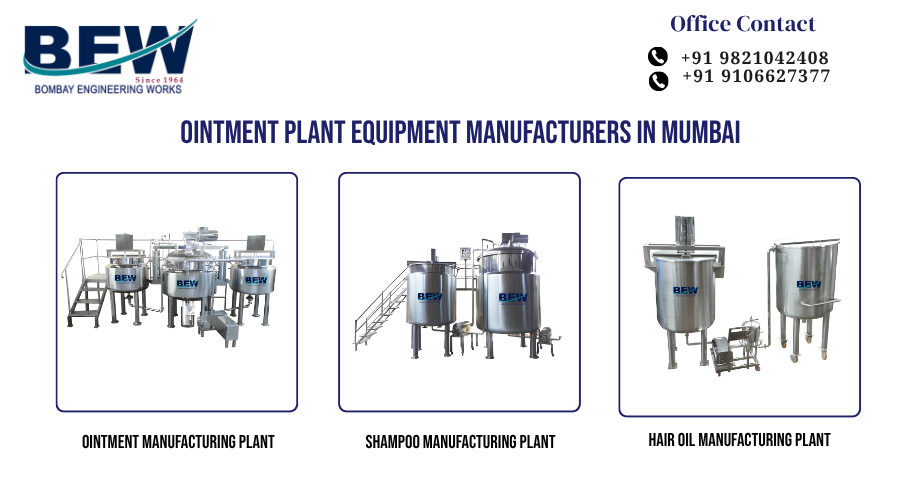
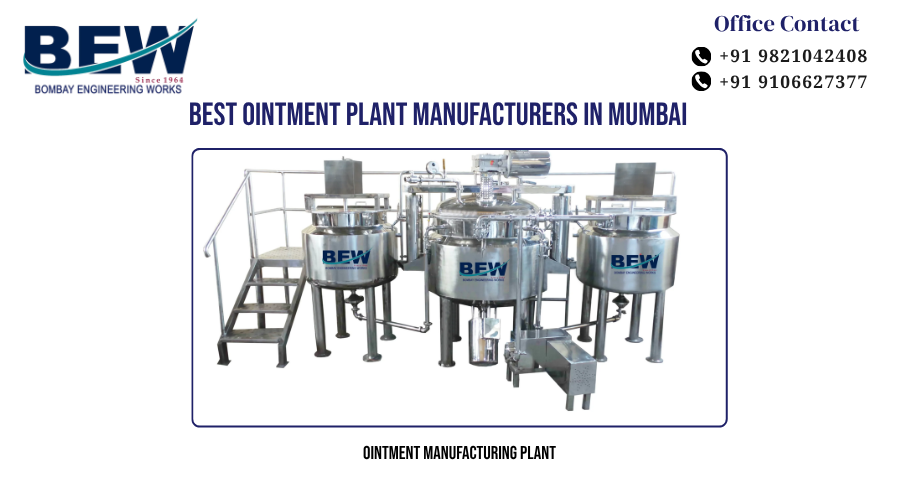
An ointment plant is a specialized industrial setup used for the manufacturing processes of semi-solid pharmaceutical products like medicated ointments, topical creams, dermatological gels, and therapeutic pastes. These products are widely used for skin treatments, pain relief applications, infection control, burn care solutions, and cosmetic applications.
The plant is designed to handle various stages of production, including:
- Mixing and blending of raw materials
- Heating and cooling processes
- Homogenization
- Vacuum processing
- Storage and filling
The primary objective is to ensure uniform texture, contamination-free production, and high product stability.
Importance of Ointment Plant in Pharmaceutical Manufacturing
The pharmaceutical industry requires strict regulatory compliance with quality assurance standards. An ointment plant plays a vital role in ensuring:
1. Hygienic Production
The system is designed with stainless steel contact parts to prevent contamination.
2. Consistency in Product Quality
Advanced mixing and homogenization ensure uniform texture and composition.
3. High Efficiency
Automated processes reduce manual effort and increase production speed.
4. Regulatory Compliance
Modern ointment plants meet GMP (Good Manufacturing Practices) and WHO standards.
5. Cost-Effective Production
Reduced wastage and improved batch consistency help optimize production costs.
Key Components of an Ointment Plant
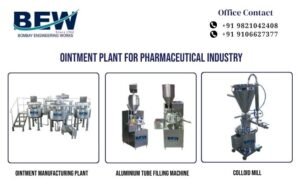
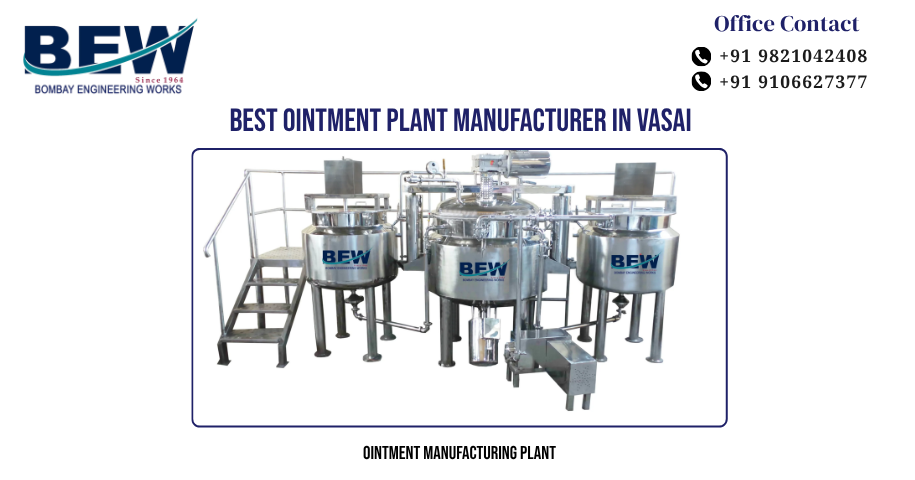
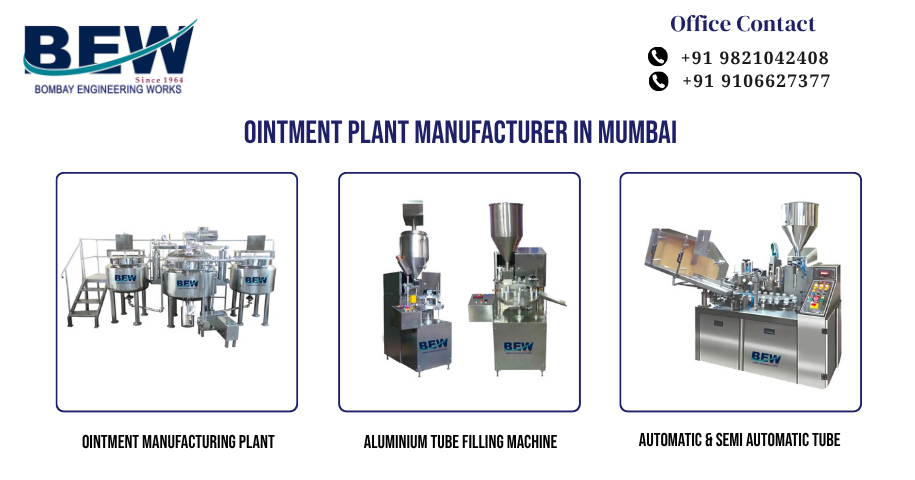
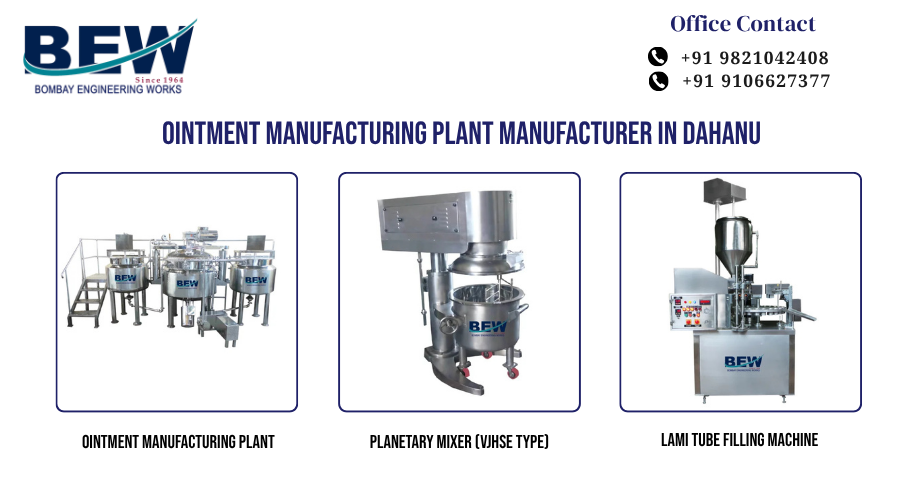
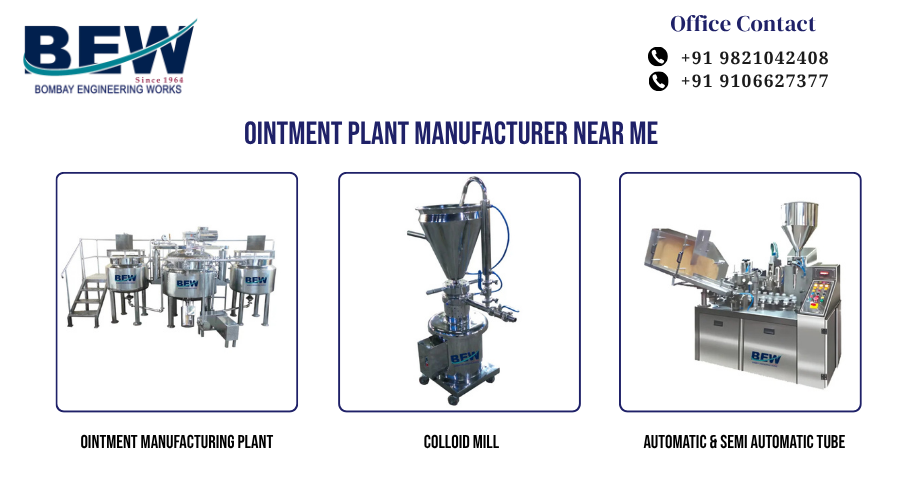
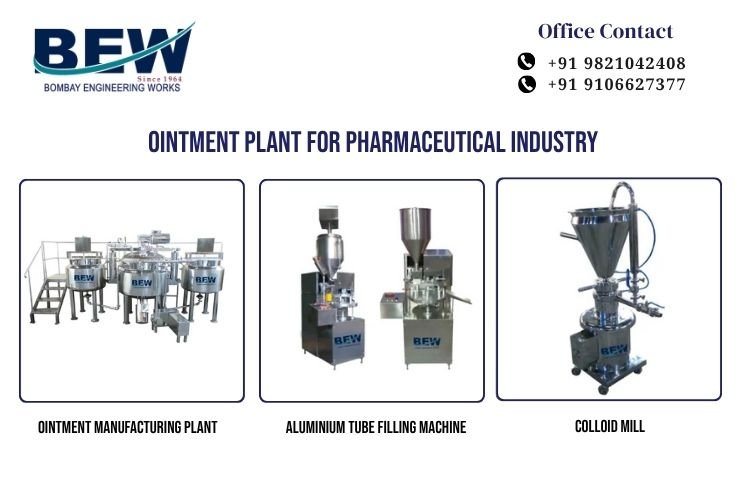
A complete ointment manufacturing plant consists of several integrated machines and systems:
1. Manufacturing Vessel
Used for mixing and heating raw materials under controlled conditions.
2. Vacuum Emulsifying System
Removes air bubbles and ensures smooth, stable formulations.
3. Storage Tanks
Hygienic storage of raw materials and finished products.
4. Homogenizer
Breaks down particles to achieve a fine and uniform consistency.
5. Transfer Pumps
Used for moving materials between different stages of production.
6. Cooling System
Helps maintain product stability and prevents degradation.
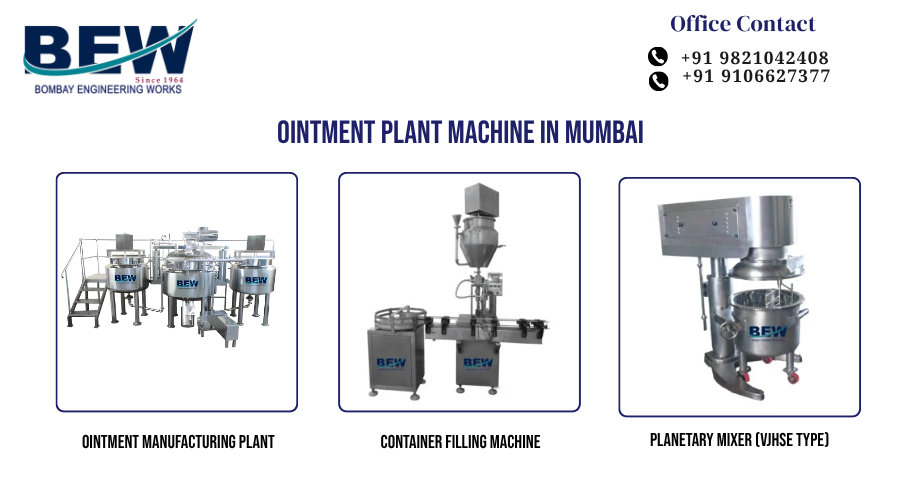
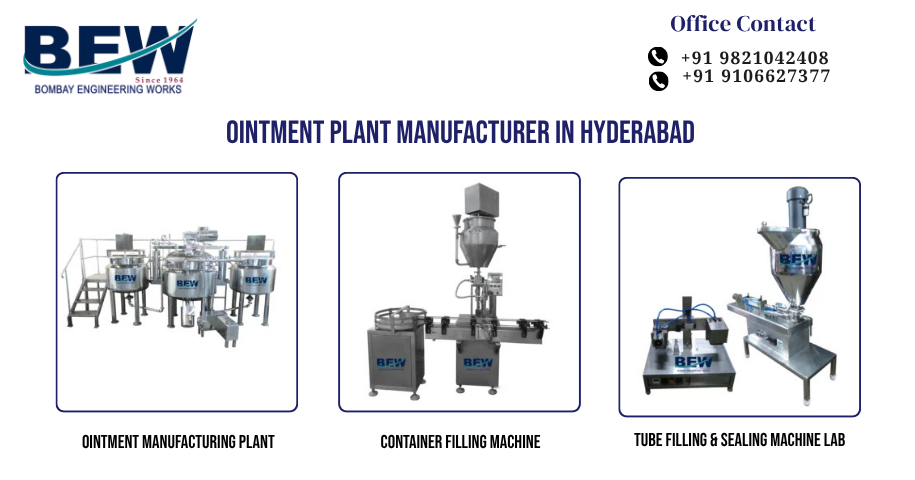
7. Filling Machine
Automates the packaging of ointments into tubes, jars, or containers.
Working Process of an Ointment Plant
The working of an ointment plant follows a systematic process:
Raw Material Preparation
Ingredients such as waxes, oils, water, and active pharmaceutical ingredients are measured and prepared.
Heating and Mixing
Materials are heated and mixed in a manufacturing vessel to form a uniform base.
Emulsification
The vacuum emulsifying system ensures smooth blending and removes trapped air.
Homogenization
The mixture is processed through a homogenizer to achieve a fine texture.
Homogenizer
Ensures uniform particle size distribution.
Cooling
The product is cooled gradually to maintain stability.
Filling and Packaging
The final product is filled into tubes or containers using automated filling machines.
Types of Ointment Plants
Depending on production requirements, ointment plants are available in different industrial configurations:
1. Semi-Automatic Ointment Plant
Suitable for small to medium-scale production.
2. Fully Automatic Ointment Plant
Designed for large-scale pharmaceutical industries with high production capacity.
3. Vacuum Ointment Plant
Ensures air-free and highly stable formulations.
4. Pilot Ointment Plant
Used for research and development purposes.
Applications of Ointment Plant
The ointment plant is widely used in various industries:
Advantages of Using an Ointment Plant
1. High Production Efficiency
Automated systems allow faster production cycles.
2. Superior Product Quality
Ensures smooth texture and uniform composition.
3. Hygienic Manufacturing
Closed systems reduce contamination risks.
4. Reduced Labor Costs
Automation minimizes manual intervention.
5. Versatility
Can be used for multiple formulations like creams, gels, and lotions.
6. Energy Efficient
Modern systems are designed for low energy consumption.
Quality Standards
At Bombay Engineering Works, we ensure that every ointment plant is manufactured according to international pharmaceutical standards:
- GMP (Good Manufacturing Practices)
- WHO Guidelines
- ISO Quality Standards
- FDA Requirements (where applicable)
This ensures safety, reliability, and global acceptance of the equipment.
Technological Innovations in Ointment Plants
Modern ointment plants are equipped with advanced features such as:
- PLC-based control systems
- Touchscreen automation panels
- Vacuum-based air removal technology
- Energy-efficient motors
- CIP (Clean-in-Place) systems
These innovations improve productivity and ensure consistent output quality.
Maintenance of Ointment Plant
Proper maintenance ensures long-term performance:
- Regular cleaning after every batch
- Routine inspection of mechanical parts
- Lubrication of moving components
- Calibration of control systems
- Timely replacement of worn-out parts
Future of Ointment Manufacturing Industry
The pharmaceutical industry is rapidly evolving with increasing demand for dermatological products and cosmetic solutions. The future of ointment manufacturing is expected to focus on:
- Fully automated smart factories
- AI-driven process monitoring
- Eco-friendly production systems
- High-speed continuous manufacturing
Frequently Asked Questions (FAQs)
Q1. What is an ointment plant used for?
Ans: An ointment plant is used to manufacture creams, gels, ointments, and other semi-solid pharmaceutical products.
Q2. Is the ointment plant GMP compliant?
Ans: Yes, modern ointment plants are designed as per GMP standards to ensure hygienic and safe production.
Q3. What industries use ointment plants?
Ans: Pharmaceutical, cosmetic, Ayurvedic, and herbal industries widely use ointment plants.
Q4. What is the capacity of an ointment plant?
Ans: The capacity varies from small-scale to large industrial production, depending on requirements.
Q5. Why choose Bombay Engineering Works?
Ans: With experience since 1964, they offer high-quality, reliable, and customized pharmaceutical machinery.
Contact Bombay Engineering Works Today
Looking for a high-quality Ointment Plant for Pharmaceutical Industry? Get in touch with our experts today.
Address: Unit No. 9, Unity Industrial Estate, Naikpada, Valiv Village, Near Ganesh Mandir, Vasai East, Dist: Palghar-401208.
Phone: +91 9821042408 / +91 9106627377
Email: info@bombayengg.com / admin@bombayengg.com / support@bombayengg.com
Website: www.bombayengg.com
We specialize in manufacturing reliable and GMP-compliant pharmaceutical machinery tailored to your production needs. Reach out now for inquiries, quotations, or technical support.
Conclusion
The Ointment Plant for Pharmaceutical Industry is a crucial industrial investment for companies involved in topical pharmaceutical production and cosmetic product manufacturing. It ensures manufacturing efficiency, hygienic processing standards, and consistent product quality in every batch.
At Bombay Engineering Works, we take pride in delivering world-class pharmaceutical machinery backed by decades of industry experience and continuous innovation.
If you are looking for a reliable machinery manufacturer of ointment plants and other pharmaceutical machinery, we are here to help you with expert support.
Call Bombay Engineering Works today: 9821042408
Visit: www.bombayengg.com
“Don’t forget to share this post!”