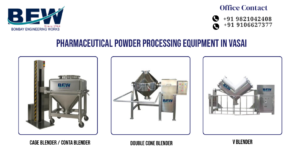
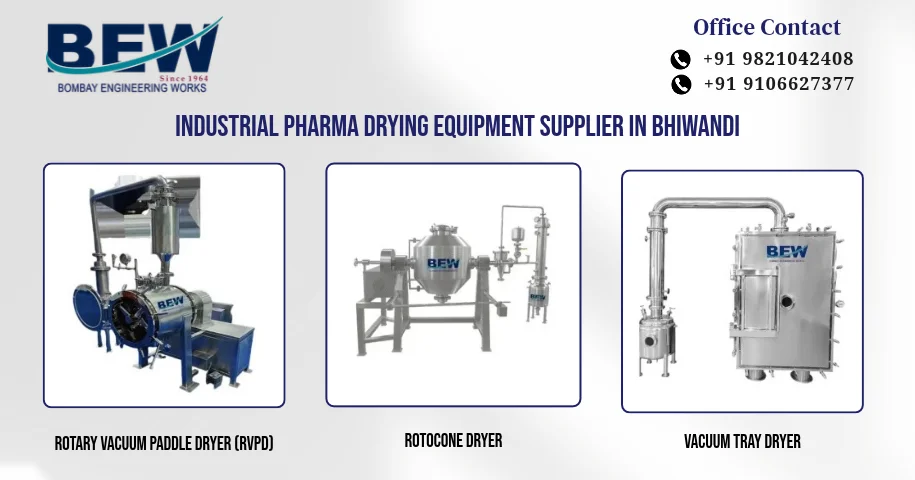
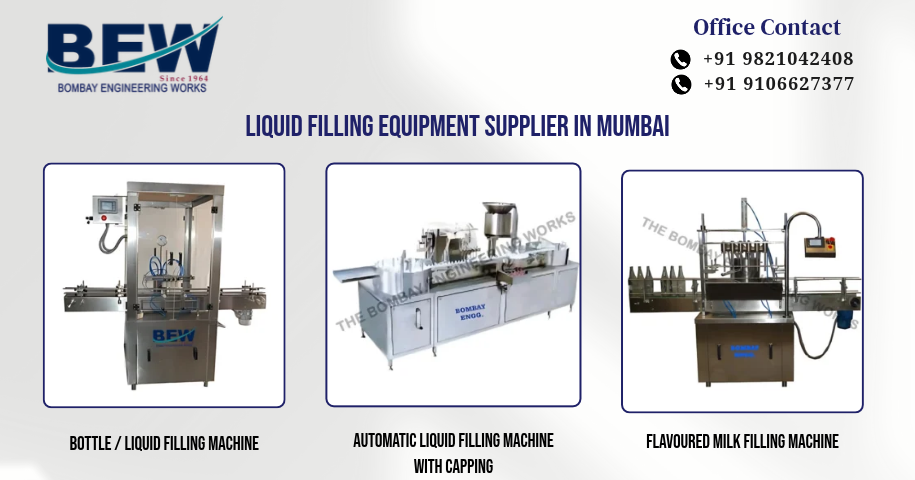
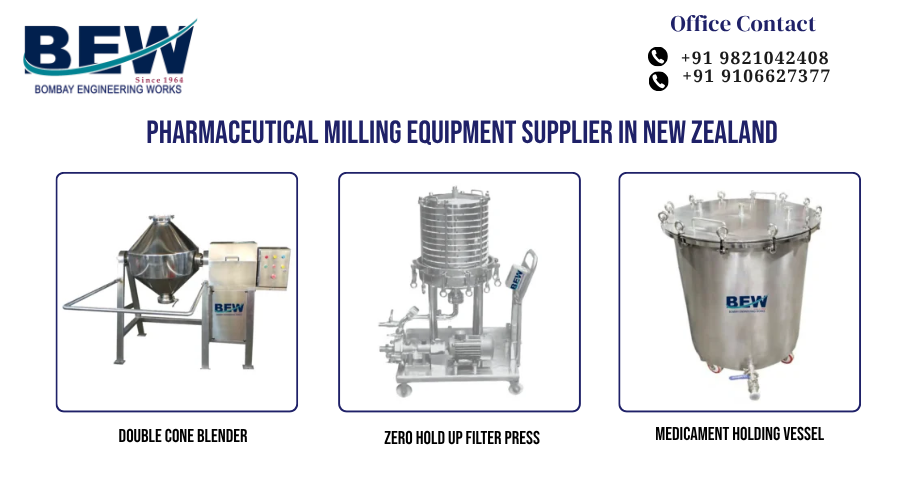
Pharmaceutical Powder Processing Equipment in Vasai





Pharmaceutical Powder Processing Equipment in Vasai for Reliable Manufacturing Solutions | Bombay Engineering Works
The pharmaceutical industry depends on precision, consistency, hygiene, and efficient production processes. From preparing active pharmaceutical ingredients (APIs) to blending excipients and producing uniform powder mixtures, every processing stage can influence the quality of the final product. Therefore, selecting the right Pharmaceutical Powder Processing Equipment in Vasai is an important decision for pharmaceutical manufacturers, contract manufacturing organisations, research facilities, and industrial processing units.
Bombay Engineering Works, established in 1964, is a manufacturer and supplier of industrial machinery serving pharmaceutical and related industries. With a broad machinery portfolio covering pharmaceutical, chemical, food processing, cosmetic, Ayurvedic, and herbal applications, the company supports businesses looking for suitable equipment for their manufacturing requirements.
Call us today: 9821042408 Website: www.bombayengg.com
About Bombay Engineering Works
Bombay Engineering Works, established in 1964, is a manufacturer and supplier of industrial machinery serving a wide range of industries. With decades of industry experience, the company focuses on providing machinery solutions that support efficient processing, reliable operations, and diverse manufacturing requirements.
The company offers machinery for several sectors, including pharmaceuticals, chemicals, food processing, cosmetics, and Ayurvedic and herbal products. Its broad industry focus helps businesses explore suitable equipment for different production processes, from raw material handling to specialised processing applications.
In the pharmaceutical industry, selecting appropriate machinery is essential for maintaining process consistency, managing powder characteristics, and supporting efficient manufacturing workflows. Pharmaceutical powder processing equipment may include machines for mixing, blending, grinding, pulverising, and sieving, depending on the specific application and production requirements.
What Is Pharmaceutical Powder Processing Equipment?
Pharmaceutical powder processing equipment refers to machinery used to handle, reduce, mix, blend, screen, granulate, or otherwise process powdered materials during pharmaceutical manufacturing.
These machines are used at different stages of production, depending on the formulation and the required dosage form. For example, a manufacturer producing tablets may need powder blending and granulation equipment, while a company handling dry pharmaceutical ingredients may require a suitable mill, sifter, or powder transfer system.
The primary objective is to achieve the required material characteristics while maintaining process consistency and protecting product quality.
Common functions include:
- Size reduction: Reducing larger particles or agglomerates to a specified particle size.
- Powder blending: Combining ingredients to achieve an appropriate degree of uniformity.
- Sieving and screening: Separating particles according to size and removing unwanted oversized material.
- Granulation: Forming granules with characteristics appropriate for subsequent manufacturing stages.
- Material transfer: Moving powders between processing, storage, and packaging operations.
- Dust control: Managing airborne particles and reducing unwanted product loss or workplace exposure.
Not every pharmaceutical facility requires every type of machine. The correct equipment configuration depends on the formulation, manufacturing method, production volume, process validation strategy, and intended final product.
Why Pharmaceutical Manufacturers in Vasai Need Suitable Powder Processing Machinery
Manufacturers must balance production efficiency with strict quality expectations. In powder-based manufacturing, even small differences in particle size, moisture content, mixing time, or material flow can affect downstream processing.
Consequently, equipment selection should be based on the actual production process rather than on a machine’s general description alone.
1. Consistent Powder Quality
Uniformity is particularly important when different ingredients must be distributed throughout a batch. An appropriately selected blender can support consistent mixing, although performance depends on the formulation, loading level, particle properties, and operating conditions.
Manufacturers should assess whether the machine can meet their specified blend-uniformity requirements under representative production conditions.
2. Improved Production Efficiency
Manual handling and unsuitable equipment can introduce unnecessary process steps. Appropriate machinery can streamline material movement, reduce repetitive handling, and support a more organised manufacturing workflow.
For growing pharmaceutical businesses, this may also make it easier to plan production schedules and manage increasing batch requirements.
3. Better Control Over Particle Size
Particle size can influence powder flow, blending behaviour, dissolution, and the performance of certain dosage forms. Milling and screening equipment can help manufacturers control particle-size distribution when properly selected and operated.
Nevertheless, excessive milling may generate heat, alter material properties, or create unwanted fine particles. Therefore, the process must be evaluated against the material’s characteristics and the product’s requirements.
4. Hygienic Processing
Pharmaceutical machinery should be designed and maintained according to the intended application and applicable requirements. Product-contact surfaces, equipment accessibility, cleaning procedures, and material compatibility are important considerations.
A suitable design can simplify cleaning and help reduce the risk of cross-contamination between products.
5. Scalable Manufacturing Operations
Equipment should match both current production needs and realistic future requirements. A machine that is too small may create a bottleneck, whereas excessive capacity may lead to inefficient operation or unsuitable working conditions.
Manufacturers should therefore compare working capacity, batch size, process time, and expected production demand before making a purchasing decision.
Types of Pharmaceutical Powder Processing Equipment
Different processing operations require different machines. Understanding their functions helps pharmaceutical manufacturers identify the equipment appropriate for each production stage.
1. Pharmaceutical Powder Mixing and Blending Machines
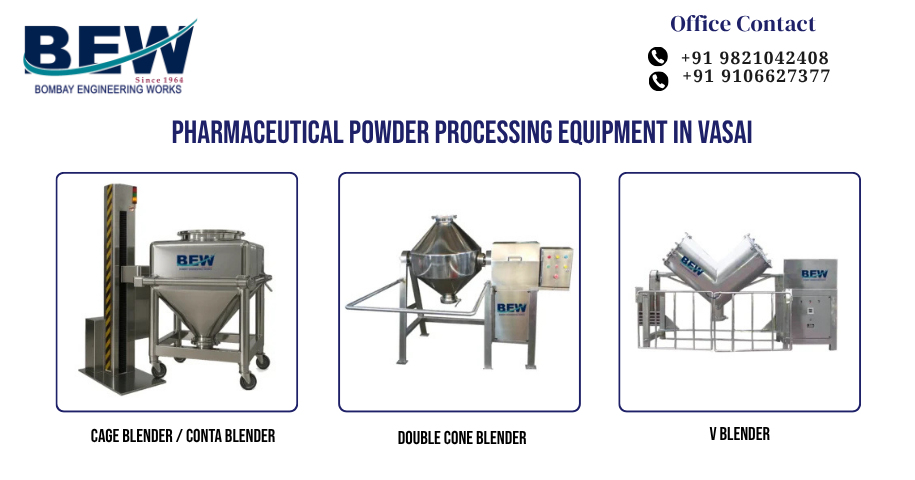
Powder mixers and blenders combine two or more ingredients to achieve the desired distribution throughout a batch. They are commonly considered for tablet formulations, dry powder preparations, premixes, and other powder-based manufacturing processes.
The appropriate blender depends on particle size, particle density, cohesion, batch volume, and the sensitivity of the ingredients.
Depending on the application, manufacturers may evaluate:
- Blender geometry and mixing mechanism.
- Working capacity and minimum practical batch size.
- Loading and unloading arrangements.
- Mixing time and speed controls.
- Cleaning accessibility.
- Dust containment and product-contact materials.
A suitable blending system can help improve batch consistency, but uniformity should be confirmed through appropriate sampling and testing rather than assumed from mixing time alone.
2. Pharmaceutical Pulverisers and Grinding Machines
Pulverisers and grinding machines reduce the size of suitable solid materials. They may be used when ingredients require a smaller particle size or when agglomerates must be broken down before further processing.
Selection depends on material hardness, moisture, heat sensitivity, required particle-size distribution, and the possibility of dust generation.
3. Pharmaceutical Sieving and Screening Equipment
Not all materials are suitable for the same grinding mechanism. Heat-sensitive, abrasive, or highly potent substances may require specialised process and containment considerations.
Sieving equipment separates particles based on size. It can help remove oversized particles, break up certain soft agglomerates when the equipment is designed for that purpose, or prepare powders for subsequent operations.
Important considerations include screen aperture, mesh material, throughput, vibration characteristics, and ease of screen replacement.
A pharmaceutical sifter should be selected according to the required separation performance and the nature of the product. Screen integrity and appropriate inspection are also important for preventing unwanted particles from entering the finished batch.
Applications of Pharmaceutical Powder Processing Machinery
Pharmaceutical powder processing equipment supports a range of manufacturing operations. The exact application depends on the formulation and the intended dosage form.
Tablet Manufacturing
Tablet production commonly involves preparing and blending ingredients before compression. Depending on the formulation, the process may also require milling, sieving, granulation, and drying.
Consistent material properties can help support reliable downstream processing. However, final tablet quality depends on the complete manufacturing process, including formulation design, compression parameters, and quality control.
Capsule Manufacturing
Powder and granule preparation is important in many capsule manufacturing processes. Blending, screening, and suitable material handling can help prepare a formulation for filling.
The required flow characteristics, density, and uniformity depend on the capsule formulation and filling equipment.
Dry Powder Formulations
Certain pharmaceutical preparations use dry powder blends. These applications may require careful control of particle characteristics, moisture exposure, and ingredient distribution.
The equipment must be appropriate for the specific product and intended use.
Pharmaceutical Ingredient Processing
Manufacturers and processors handling pharmaceutical ingredients may require milling, screening, mixing, and controlled transfer operations.
Where active ingredients have specific exposure or handling risks, the equipment and facility should be designed around a documented risk assessment.
Research and Development
Research laboratories and pilot-scale facilities may need smaller-capacity equipment for formulation development, process trials, and scale-up studies.
For these applications, flexibility, cleaning convenience, controllability, and the ability to reproduce operating conditions can be particularly valuable.
How to Choose the Right Pharmaceutical Powder Processing Equipment in Vasai
1. Understand the Material Properties
Begin by identifying the characteristics of the material being processed. These may include particle size, bulk density, moisture content, flow behaviour, abrasiveness, heat sensitivity, and electrostatic properties.
Also consider whether the material is potent, sensitising, combustible, or otherwise hazardous.
These properties affect the suitable processing mechanism, equipment construction, transfer method, and containment requirements.
2. Define the Required Production Capacity
Determine the expected batch size, throughput, operating hours, and number of production batches per day.
Ask the supplier to clarify the difference between total machine volume and recommended working capacity. These values are not necessarily the same.
Capacity should be evaluated alongside processing time, loading and unloading time, cleaning downtime, and the requirements of connected equipment.
3. Confirm the Required Particle Size or Mixing Performance
For milling and sieving, define the target particle-size distribution and acceptable variation.
For blending, identify the required uniformity criteria and the method that will be used to verify them.
The supplier should understand the material and the performance target before recommending a particular machine configuration.
4. Evaluate Construction Materials
These requirements should be confirmed in the technical quotation and equipment documentation rather than inferred from a general product description.
Depending on the application, manufacturers may request stainless steel construction, particular surface finishes, compatible seals, or other material specifications.
Product-contact materials must be compatible with the formulation, cleaning agents, and operating environment.
5. Consider Cleaning and Changeover
Where multiple products are manufactured on the same equipment, cleaning and changeover procedures are critical.
Assess whether product-contact areas are accessible, whether components can be removed safely, and whether the design supports the intended cleaning method.
Cleaning validation requirements depend on the facility, product risk, and applicable quality system.
Why Consider Bombay Engineering Works for Pharmaceutical Machinery?
Choosing a machinery supplier is an important step in developing or upgrading a pharmaceutical manufacturing facility.
Bombay Engineering Works was established in 1964 and offers machinery across pharmaceutical, chemical, food processing, cosmetic, Ayurvedic, and herbal applications.
For manufacturers exploring powder processing equipment in Vasai and the surrounding Mumbai industrial region, the company can be contacted to discuss requirements, identify potentially suitable machinery, and request relevant technical details.
Before proceeding, buyers should confirm the following directly with the company:
- Available machine models and their intended applications.
- Working capacity and performance specifications.
- Product-contact materials and construction details.
- Cleaning, maintenance, and operating requirements.
- Available documentation and testing arrangements.
- Pricing, lead time, installation, and service scope.
This approach helps establish whether the proposed machinery aligns with the facility’s production needs, quality requirements, and budget.
E-E-A-T (Experience, Expertise, Authoritativeness & Trustworthiness)
Experience
Established in 1964, Bombay Engineering Works brings decades of experience in industrial machinery manufacturing and supply across multiple industries.
Expertise
The company serves pharmaceutical and related industries with machinery solutions for diverse processing and production requirements.
Authoritativeness
Bombay Engineering Works has a long-standing presence in pharmaceutical, chemical, food processing, cosmetic, Ayurvedic, and herbal machinery sectors.
Trustworthiness
Clear technical specifications, suitable equipment selection, and transparent communication help customers make informed machinery purchasing decisions.
Frequently Asked Questions (FAQs)
Q1. What is pharmaceutical powder processing equipment?
Ans: It includes machines used for powder mixing, grinding, milling, sieving, granulation, and material handling in pharmaceutical manufacturing.
Q2. Where can I find pharmaceutical powder processing equipment in Vasai?
Ans: Bombay Engineering Works serves the industrial machinery sector and can be contacted to discuss suitable equipment options.
Q3. Which machines are used for pharmaceutical powder processing?
Ans: Common options include powder blenders, pulverisers, sifters, granulators, and powder transfer systems.
Q4. How do I choose the right pharmaceutical powder processing machine?
Ans: Consider material properties, batch capacity, particle size, cleaning requirements, containment, and production objectives.
Q5. What factors affect pharmaceutical powder processing equipment prices?
Ans: Prices depend on machine capacity, construction materials, automation, technical specifications, accessories, and installation requirements.
Contact Us
Address: Unit No. 9, Unity Industrial Estate, Naikpada, Valiv Village, Near Ganesh Mandir, Vasai East, Dist: Palghar-401208.
Phone: +91 9821042408 / +91 9106627377
Email: info@bombayengg.com / admin@bombayengg.com / support@bombayengg.com
Website: www.bombayengg.com
Conclusion
Choosing the right pharmaceutical powder processing equipment in Vasai helps manufacturers improve process consistency, streamline production, and support appropriate quality control. Equipment selection should consider material characteristics, capacity, hygiene, safety, and maintenance requirements.
Established in 1964, Bombay Engineering Works serves pharmaceutical and related industries with a broad range of industrial machinery. Selecting equipment based on specific production needs can help businesses build efficient and dependable manufacturing operations.
Call Bombay Engg today: 9821042408
Visit: www.bombayengg.com
“Don’t forget to share this post!”