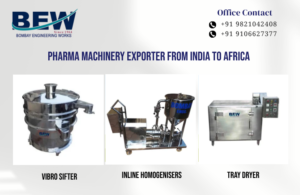
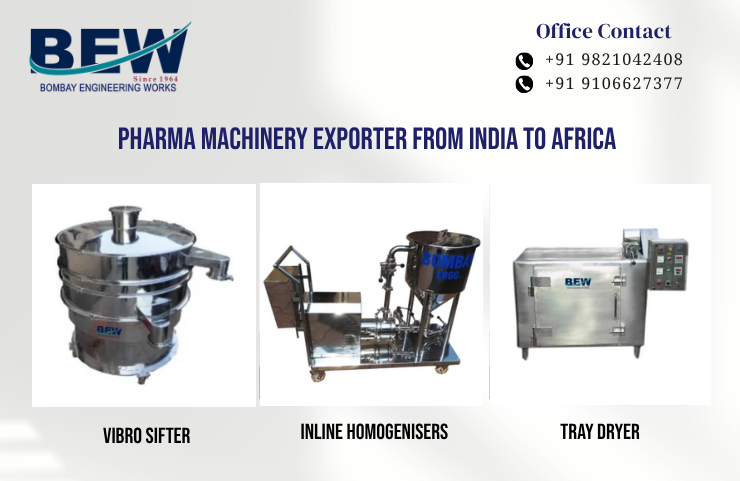
Pharma Machinery Exporter from India to Africa





Pharma Machinery Exporter from India to Africa | Bombay Engineering Works
African pharmaceutical producers searching for dependable equipment now look toward Indian engineering for cost-effective, regulation-ready solutions. As a trusted Pharma Machinery Exporter from India to Africa, Bombay Engineering Works delivers processing lines built for real production conditions. Every system is engineered to handle mixing, heating, emulsification, homogenization and vacuum processing with repeatable batch-to-batch accuracy.
Bombay Engineering Works has manufactured pharmaceutical, chemical, food processing and cosmetic machinery since 1964, supplying Ayurvedic and herbal processors as well. Decades of shop-floor engineering expertise support every industrial equipment requirement across continents.
Call us today: 9821042408
Website: www.bombayengg.com
About Us
Bombay Engineering Works, founded in 1964, designs and manufactures processing machinery for a broad spectrum of industries. Long-standing engineering experience allows the company to serve pharmaceutical, chemical, food, cosmetic, Ayurvedic and herbal sectors.
The company tailors each machine to product behaviour, process sequence, output targets and batch-size needs.
Core engineering strengths include:
- Accurate, process-driven machine design
- Hygienic, easy-to-clean construction
- Long-life industrial components
- Stable, repeatable processing output
- Flexible batch capacity options
- Formulation-specific engineering choices
- Practical solutions for modern plants
- Guidance on machine selection
- Manufacturing and supply support
For African manufacturers importing a pharma machinery exporter from India to Africa, this experience matters because production typically involves several linked processing stages. Equipment must operate as one coordinated system, not as isolated machines. For enquiries about plant requirements and machinery, contact Bombay Engineering Works at 9821042408.
What Defines a Complete Semi-Solid Processing Line?
A complete processing line is an interconnected production system built to manufacture semi-solid pharmaceutical, cosmetic, Ayurvedic, herbal and related products.
Based on the formulation, processing may involve:
- Ingredient preparation
- Oil-phase build-up
- Water-phase build-up
- Heating
- Mixing
- Emulsification
- Homogenization
- Vacuum processing
- Cooling
- Final blending
- Filtration, where needed
- Transfer to filling equipment
- Packaging
The exact sequence depends on the formulation and desired product characteristics. A pharmaceutical product may need processing conditions very different from a cosmetic cream. Herbal and Ayurvedic formulations often bring their own raw material and processing needs.
A processing line should therefore be designed around the actual product and manufacturing process, not selected purely on nominal capacity.
Why Export Partner Selection Shapes Long-Term Plant Performance
The export partner you choose affects equipment performance, process consistency, maintenance needs, production efficiency and future scalability.
A capable partner understands more than fabrication. The partner should grasp the relationship between:
Formulation → Process needs → Equipment layout → Output capacity → Hygiene → Quality → Scalability
This matters most when producing items with varying viscosities, solids content, emulsification demands or temperature sensitivity.
A proven pharma machinery exporter from India to Africa helps buyers resolve questions such as:
- Which batch capacity fits our output?
- Is vacuum processing truly needed?
- Which agitator design suits the product?
- Is homogenization required?
- What heating and cooling setup is appropriate?
- Which product-contact material should be used?
- How should equipment be cleaned?
- How should finished product be transferred?
- What automation level is appropriate?
- How can future capacity growth be accommodated?
These decisions strongly influence how useful the plant remains over the years.
Equipment That Forms a Complete Processing Line
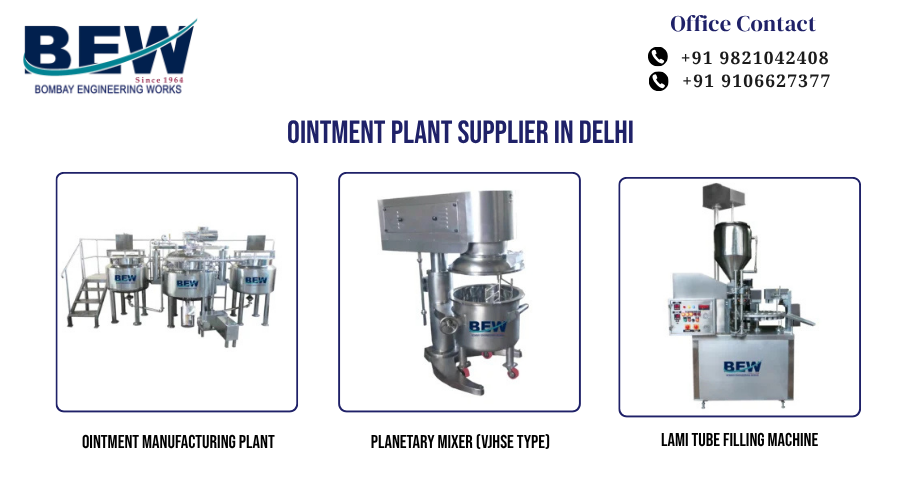
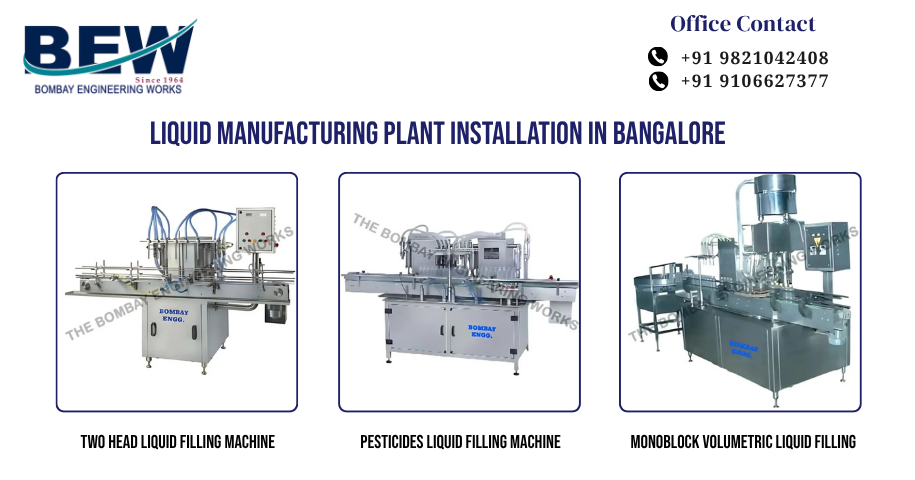
A processing line normally consists of linked equipment for mixing, heating, cooling, homogenization, storage and product transfer. The precise layout follows formulation, batch size, viscosity and output targets.
1. Main Processing Vessel with Agitator
The main vessel is where ingredients are combined and processed. It may include heating and cooling, temperature monitoring, an agitator, vacuum capability and hygienic connections.
The agitator ensures even mixing throughout the batch. Its design should match product viscosity, batch size, formulation traits, mixing needs and target processing time.
2. Homogenizer and Vacuum Assembly
A homogenizer delivers controlled high-shear processing for formulations needing fine dispersion or emulsification. The vacuum assembly helps reduce entrapped air and supports controlled processing where needed.
Both systems should be specified from the formulation and desired product characteristics, not treated as standard items for every product.
3. Temperature Control System
Controlled heating melts waxes, prepares oil phases, softens fatty ingredients and supports emulsification. After processing, controlled cooling brings the product to the required viscosity, texture, stability and consistency.
The heating and cooling setup should deliver uniform temperature control while accounting for the product’s temperature sensitivity.
4. Storage Vessel and Transfer Line
A storage vessel temporarily holds the processed product before filling or further processing. It may include agitation, temperature control, level monitoring and hygienic connections.
The transfer line moves product between processing stages. Depending on viscosity and plant layout, it may include suitable pumps, pipelines, valves and sanitary fittings.
Overall, equipment configuration should be tailored to formulation, output capacity, batch size and the specific manufacturing process.
Step-by-Step Operation of a Processing
While the exact process varies with the formulation, a typical sequence includes ingredient preparation, controlled mixing, heating, homogenization, cooling and transfer to filling.
Ingredient and Phase Preparation
Raw materials are received, checked, weighed and prepared per the formula. Where needed, oil-soluble and water-soluble components are readied separately before being combined.
Heating, Mixing and Homogenization
Waxes, fatty materials and other ingredients are heated to the required processing temperature before mixing. Prepared ingredients are combined in the main vessel with suitable agitation. For emulsion-based formulations, controlled emulsification follows, then homogenization where needed to improve uniformity.
Vacuum Processing, Cooling and Transfer
Where needed, vacuum processing helps reduce entrapped air. The product is then gradually cooled under controlled conditions, with final mixing performed as necessary to maintain uniformity. The finished product is transferred to a storage vessel or filling machine for packaging.
Sectors That Rely on Semi-Solid Processing Equipment
Semi-solid processing systems are used across several industries.
Pharmaceutical Manufacturing
Pharmaceutical processing lines produce a wide range of semi-solid topical formulations.
Depending on formulation and production needs, applications may include products designed for:
- Dermatological use
- Topical products
- Protective preparations
- Therapeutic preparations
- Semi-solid pharmaceutical items
Pharmaceutical manufacturing demands careful attention to hygiene, process control, material compatibility and batch consistency.
Cosmetic Manufacturing
The same core processing principles also apply to cosmetic products such as:
- Creams
- Balms
- Skin-care formulations
- Moisturizing products
- Protective creams
- Hair and scalp preparations
- Personal-care products
Cosmetic products often carry highly specific texture and consistency requirements, making appropriate mixing and homogenization important.
Ayurvedic and Herbal Manufacturing
Semi-solid processing systems also support Ayurvedic and herbal product manufacturing.
Depending on the formulation, manufacturers may process:
- Herbal ointments
- Herbal balms
- Ayurvedic creams
- Plant-based topical preparations
- Traditional semi-solid formulations
The processing approach should be developed according to the raw materials and formulation characteristics.
Decision Points When Buying Imported Processing Machinery
Buying processing machinery requires structured evaluation based on production and process requirements.
Capacity and Product Behaviour
Plant capacity and product properties directly influence equipment selection. Consider:
- Required batch size and annual output
- Product viscosity and mixing needs
- Future production growth plans
Thermal, Mixing and Homogenization Needs
Thermal and mixing systems should match formulation requirements. Key factors include:
- Required processing temperature
- Heating and cooling needs
- Homogenization needs
Vacuum and Construction Material
Vacuum capability and product-contact materials should be chosen from the actual process. Consider:
- Whether vacuum processing is required
- Compatibility with product ingredients
- Hygiene and process requirements
Cleaning and Serviceability
The plant should allow practical cleaning, inspection and servicing. Manufacturers should consider:
- Accessibility of product-contact areas
- Ease of cleaning and inspection
- Routine maintenance requirements
While the exact process varies with the formulation, a typical sequence includes ingredient preparation, controlled mixing, heating, homogenization, cooling and transfer to filling.
Keeping Processing Equipment Reliable Over Time
Regular maintenance preserves equipment performance.
A maintenance program may include:
- Inspecting agitators
- Checking mechanical seals
- Examining valves and fittings
- Checking pumps
- Monitoring heating systems
- Inspecting cooling arrangements
- Checking vacuum components
- Lubricating mechanical components
- Inspecting electrical and control systems
- Cleaning product-contact areas
The exact maintenance schedule should follow the machinery design and operating conditions. Preventive maintenance helps spot potential issues before they grow into major operational problems.
Plant Configurations for Every Production Scale
Different manufacturers have different production requirements.
Small-Scale Production
Small production facilities may prioritize:
- Compact equipment
- Flexible batch sizes
- Easy operation
- Lower initial investment
- Product development flexibility
Medium-Scale Production
Medium-sized manufacturers may require:
- Higher batch capacities
- Improved process automation
- Faster transfer
- Multiple product capabilities
- Better production scheduling
Large-Scale Production
Large production operations may require:
- High-capacity processing vessels
- Multiple processing vessels
- Automated controls
- Integrated transfer systems
- Dedicated storage vessels
- Higher throughput
- Production scalability
The right plant capacity should therefore be determined using realistic production calculations.
E-E-A-T (Experience, Expertise, Authoritativeness, Trustworthiness)
Experience
Bombay Engineering Works has manufactured industrial machinery since 1964, building decades of hands-on engineering and production experience.
Expertise
The company works across pharmaceutical, chemical, food, cosmetic, Ayurvedic and herbal machinery requirements, enabling it to address varied manufacturing applications.
Authoritativeness
Long-term involvement in industrial machinery manufacturing builds practical knowledge of equipment design and production requirements.
Trustworthiness
Transparent discussions about capacity, process requirements, equipment layout and application-specific needs help buyers make informed machinery decisions.
FAQ
Q1. What does a pharma machinery exporter from India to Africa actually supply?
Ans: Such an exporter supplies complete processing lines, including main vessels with agitators, homogenizers, vacuum systems, temperature control units, storage vessels and transfer lines for semi-solid pharmaceutical production.
Q2. Which manufacturers in Africa typically import these machines?
Ans: Pharmaceutical companies, cosmetic manufacturers, Ayurvedic producers, herbal product businesses and other firms making suitable semi-solid formulations usually require this equipment.
Q3. How do I evaluate a pharma machinery exporter from India to Africa?
Ans: Assess the exporter on engineering experience, manufacturing capability, product understanding, customization options, capacity range, technical support, equipment quality and suitability for your specific process.
Q4. Is vacuum processing always necessary?
Ans: No. Vacuum capability should be specified only when the formulation and process require reduced entrapped air or controlled processing conditions. Not every product needs it.
Q5. How do I decide the right plant capacity?
Ans: The right capacity depends on batch size, production targets, number of batches, product portfolio and future growth plans. Calculate real capacity before selecting equipment.
Contact Us
Address: Unit No. 9, Unity Industrial Estate, Naikpada, Valiv Village, Near Ganesh Mandir, Vasai East, Dist: Palghar-401208.
Phone: +91 9821042408 / +91 9106627377
Email: info@bombayengg.com / admin@bombayengg.com / support@bombayengg.com
Website: www.bombayengg.com
Conclusion
Choosing a Pharma Machinery Exporter from India to Africa is a key decision for any company planning to manufacture pharmaceutical, cosmetic, Ayurvedic, herbal or related semi-solid products. A successful plant requires more than a processing vessel. The complete process may involve controlled heating, cooling, mixing, homogenization, vacuum processing, transfer, holding and filling. Therefore, equipment should be evaluated as an integrated production solution.
With its establishment dating back to 1964, Bombay Engineering Works brings decades of engineering and manufacturing experience to machinery requirements across pharmaceutical, chemical, food, cosmetic, Ayurvedic and herbal industries.
Call Bombay Engineering Works today: 9821042408
Visit: www.bombayengg.com
“Don’t forget to share this post!”